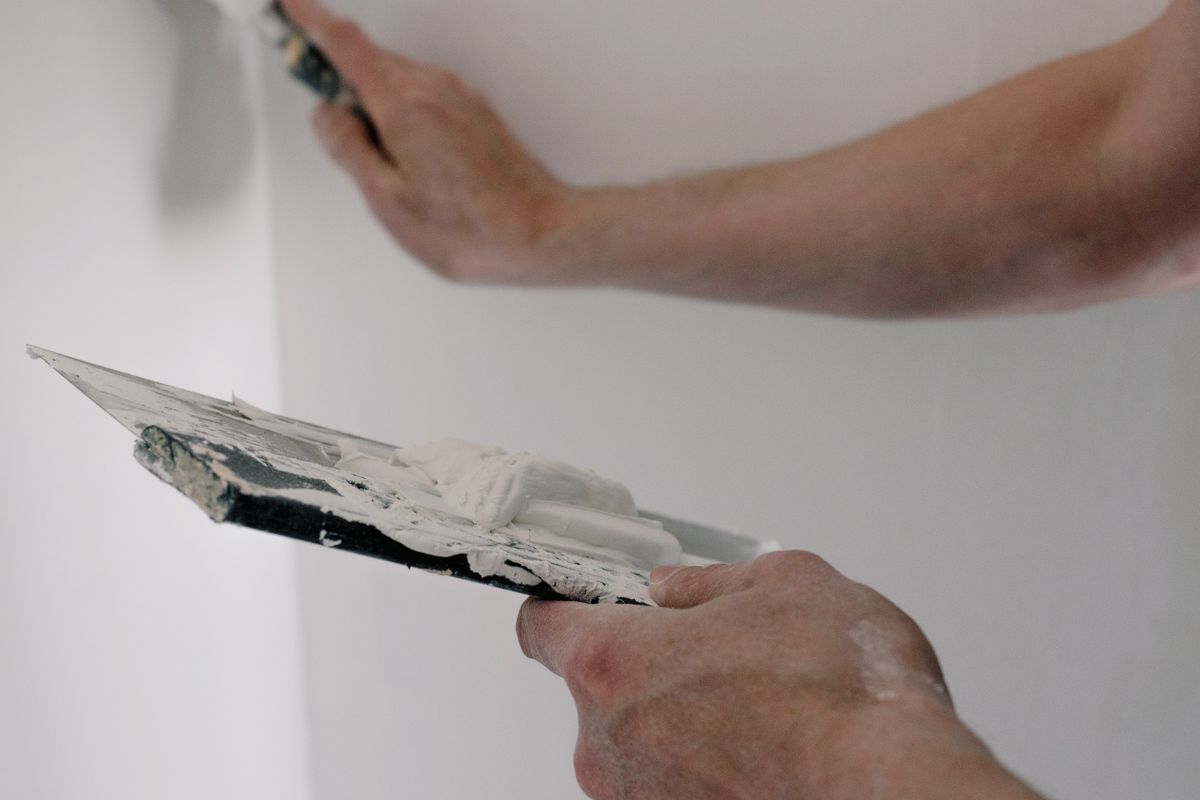
A good drywall patch is not just a square piece of board in a hole. It needs stable backing, clean tape, the right compound build, controlled sanding, and a finish that blends into the surrounding wall.
Weak backing is the reason many patches crack later. The patch has to be supported so it does not move independently from the existing wall. Movement creates hairline cracks even if the surface looked fine on the day of repair.
The second issue is the edge. A patch needs feathering beyond the damaged area so the repair does not leave a hump. This is especially important in hallway light, near windows, or anywhere side-lighting makes surface changes obvious.
Texture matching is its own step. Orange peel, knockdown, and smooth walls each require a different finish approach. Texture should be tested and blended, not sprayed heavily over a small spot.
A paint-ready patch should feel flat, look blended, and avoid the classic rectangle shadow that appears once primer or paint hits the wall.