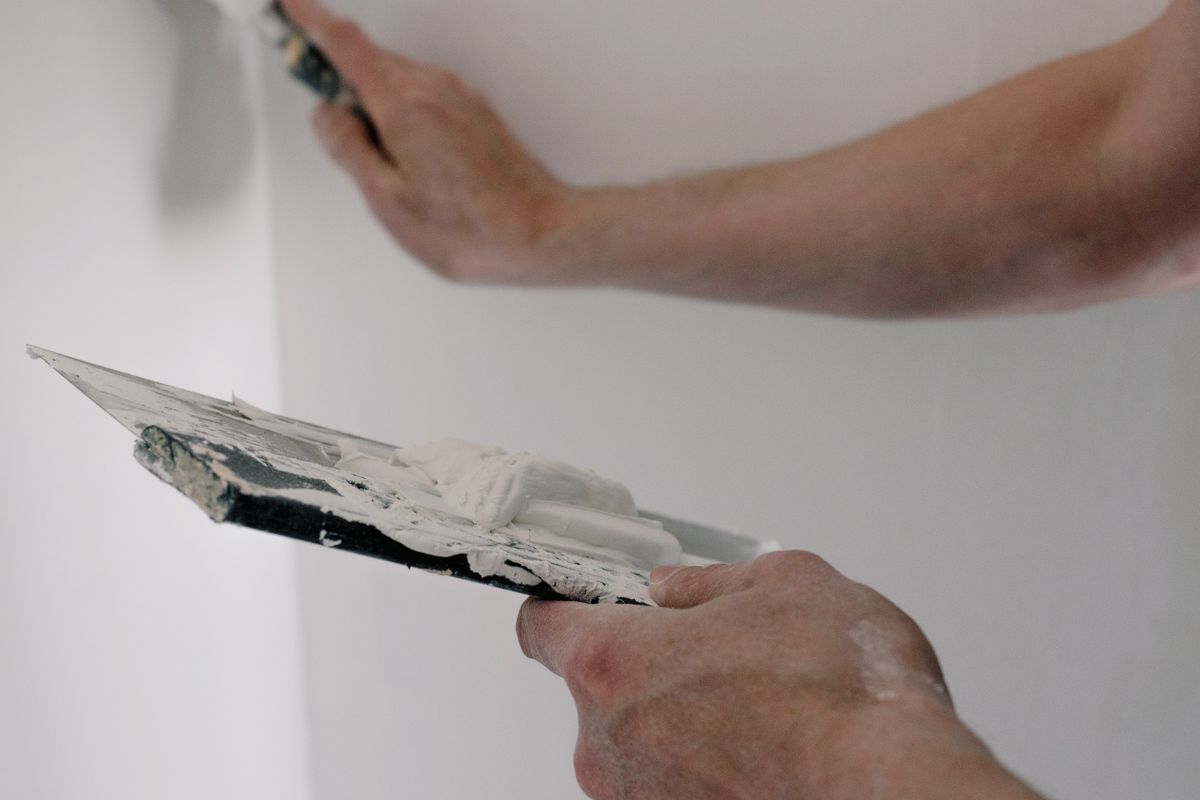
Smooth wall repair and textured drywall repair are different jobs. Smooth walls show small waves and sanding marks, while textured walls show mismatched spray pattern, thickness, and sheen.
On a smooth wall, the float has to be wide enough to hide the patch edge. The sanding has to be controlled so the surrounding surface is not damaged. Primer then helps reveal any final touchups before paint.
On a textured wall, the repair still needs to be flat first. Texture should not be used to hide a bad patch. Once the surface is right, the texture can be matched as closely as possible to the existing wall.
Lighting is a major factor. Hallways, stairwells, and rooms with windows can reveal flaws that do not show from straight on. A professional repair checks the wall from multiple angles.
The best result is not the heaviest texture or the fastest coat. It is the repair that looks consistent after the final paint dries.